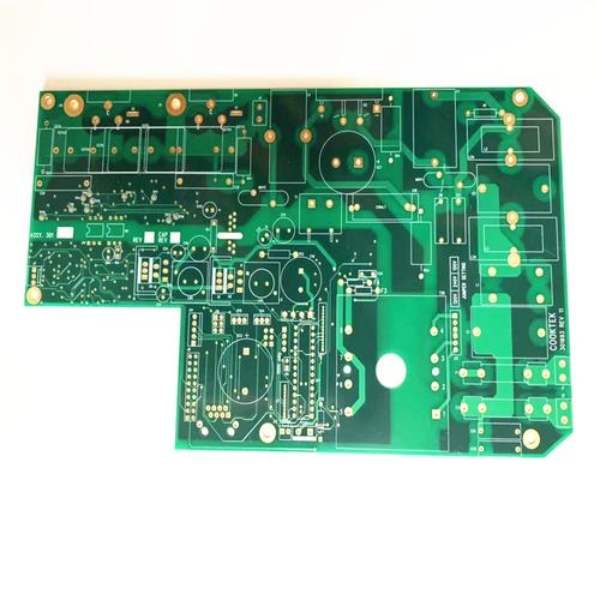
Rigid PCB
Rigid PCB
A Rigid PCB (Printed Circuit Board) is a solid, non-flexible laminated board that serves as the mechanical backbone and electrical foundation for electronic components and their interconnections. Constructed from a firm base material, typically fiberglass (FR4), these boards are designed to maintain their shape permanently. Once manufactured, they cannot be bent or twisted. Rigid PCBs are the most common type of circuit board found in electronics, known for their reliability, durability, and cost-effectiveness. They can be built as single-sided, double-sided, or multi-layer boards to accommodate various levels of circuit complexity.
A Rigid PCB (Printed Circuit Board) is a solid, non-flexible laminated board that serves as the mechanical backbone and electrical foundation for electronic components and their interconnections. Constructed from a firm base material, typically fiberglass (FR4), these boards are designed to maintain their shape permanently. Once manufactured, they cannot be bent or twisted. Rigid PCBs are the most common type of circuit board found in electronics, known for their reliability, durability, and cost-effectiveness. They can be built as single-sided, double-sided, or multi-layer boards to accommodate various levels of circuit complexity.
Key Features
- Solid Structure: The board retains its shape permanently, providing stable support for components.
- Base Material: Commonly made from flame-retardant fiberglass (FR4), epoxy, or phenolic materials.
- Component Density: Supports high-density component mounting due to its rigid framework.
- Layering Capability: Can be manufactured with multiple layers (1 to 20+) for complex circuit designs.
- Reliability: Excellent solder joints and stable electrical connections.
Advantages
- Durability: Resistant to vibrations and mechanical stress, ensuring the safety of mounted components.
- Low Maintenance: The solid structure makes them easy to diagnose and repair if a component fails.
- Cost-Effective for Mass Production: Ideal for high-volume manufacturing due to standardized production processes.
- Excellent Thermal Dissipation: Can effectively manage heat through the substrate and integrated heat sinks.
- High Speed & Performance: Supports high-speed electronic signals without the signal interference often found in flexible circuits.
Applications
Due to their strength and reliability, Rigid PCBs are used in virtually every electronic device that does not require flexing.
- Consumer Electronics: Smartphones, desktop computers, laptops, televisions, and gaming consoles.
- Industrial Equipment: Power supplies, motor controllers, and factory automation systems.
- Medical Devices: Monitors, imaging systems (X-rays, CT scanners), and diagnostic equipment.
- Automotive: Engine Control Units (ECUs), dashboard displays, sensors, and infotainment systems.
- Telecommunications: Routers, servers, and communication towers.
- Aerospace & Defense: Control systems for aircraft, navigation equipment, and radar systems.