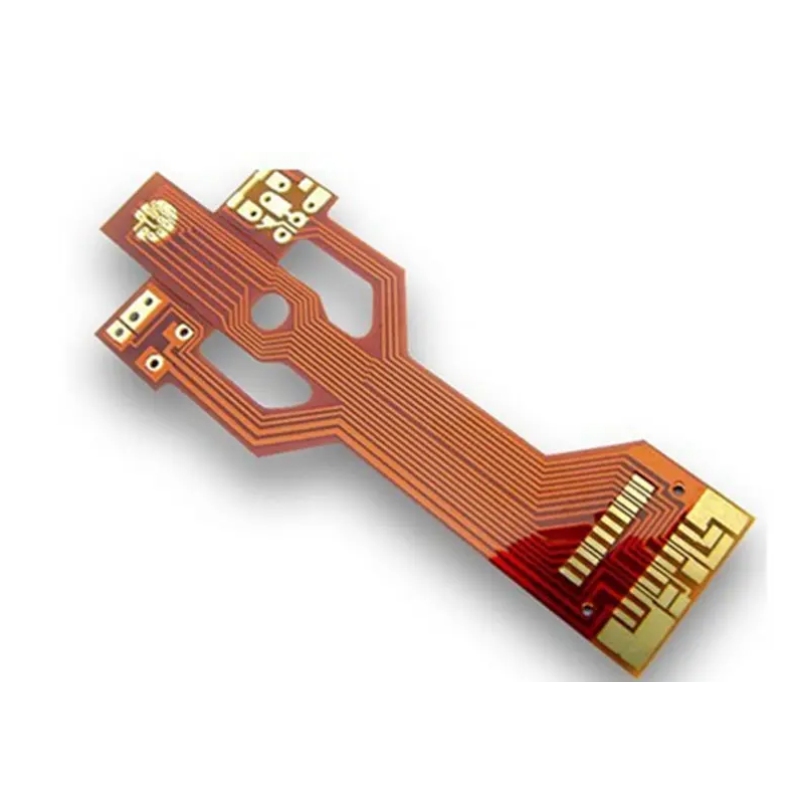
A Flexible Printed Circuit Board (Flex PCB) is a revolutionary interconnect solution that replaces traditional rigid boards and bulky wire harnesses. It consists of thin, insulating polymer substrates (like polyimide or polyester) laminated with conductive copper traces. This unique construction allows the circuit to bend, fold, and flex dynamically during use, enabling three-dimensional packaging and movement that rigid boards cannot achieve.
Key Advantages of Flexible PCBs
• Space and Weight Savings: Their thin, lightweight nature allows for incredibly compact and dense electronics packaging, crucial for modern miniaturized devices.
• Superior Flexibility and Durability: Designed to withstand millions of bending cycles, they are ideal for applications involving constant motion or vibration.
• Enhanced Reliability: By eliminating many connectors and solder joints required for wire harnesses, flex circuits reduce potential points of failure, improving overall system reliability.
• 3D Assembly Capability: They can be folded and shaped to fit into complex, three-dimensional spaces, offering unparalleled design freedom.
• High-Temperature and Chemical Resistance: Common materials like polyimide offer excellent stability in demanding environments (e.g., under automotive hoods or in industrial settings).
• Streamlined Assembly: Integrating multiple interconnects and rigid boards into a single flex assembly simplifies the production process and lowers assembly costs.
Primary Application Scenarios
• Consumer Electronics: Found in smartphones (foldable displays, camera connections), laptops, wearables (smartwatches, fitness bands), and digital cameras.
• Automotive Electronics: Used in infotainment systems, LED lighting, sensors, control units, and advanced driver-assistance systems (ADAS) where space is tight and reliability is critical.
• Medical Devices: Essential for compact, reliable equipment like hearing aids, pacemakers, medical imaging systems, and wearable monitors.
• Aerospace and Defense: Employed in satellites, avionics, and guidance systems due to their light weight, vibration resistance, and reliability in harsh conditions.
• Industrial Electronics: Applied in robotics (for moving joints), industrial automation, and compact sensors where repeated flexing is required.
• Telecommunications: Used in base station antennas, routers, and other networking hardware for high-frequency signal transmission.
For further customization (e.g., material selection, process optimization), feel free to contact our technical team for tailored solutions.