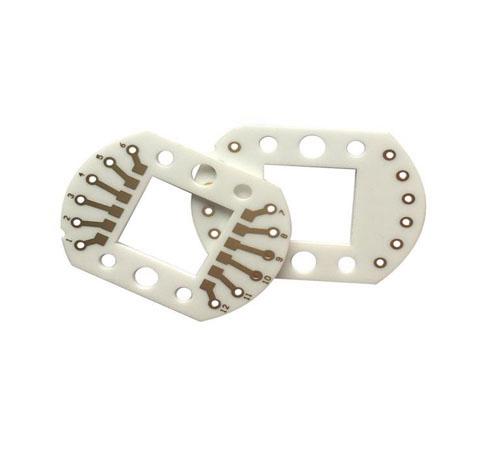
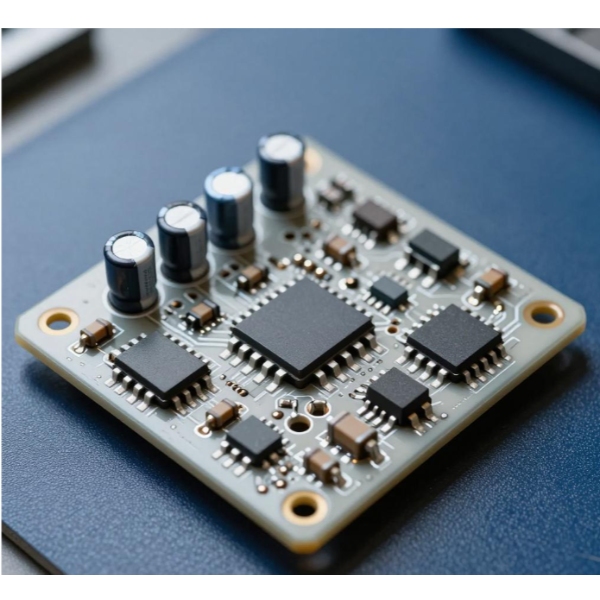
Ceramic Printed Circuit Boards (PCBs) are advanced circuit boards that use ceramic materials (such as aluminum oxide, aluminum nitride, or beryllium oxide) as the substrate instead of traditional FR4 or metal cores. Designed for high-performance applications, they offer exceptional thermal, mechanical, and electrical properties, making them ideal for demanding environments where standard PCBs may fail.
Advantages of Ceramic PCBs
1.Excellent Thermal Management: Ceramic materials have high thermal conductivity, efficiently dissipating heat from components and reducing the risk of overheating.
2.High Electrical Insulation: Provides strong dielectric strength and insulation resistance, ensuring reliable performance in high-voltage circuits.
3.Superior Stability: Resistant to thermal expansion, chemicals, and moisture, maintaining performance under extreme temperatures and harsh conditions.
4.Compact Design: Allows for high-density interconnections and miniaturization, saving space in advanced electronic systems.
5.Long-Term Reliability: Offers enhanced durability and a longer lifespan compared to organic substrates, even in rigorous applications.
Application Scenarios
• Power Electronics: Used in high-power modules, inverters, and motor drives for efficient heat dissipation.
• LED Lighting: Ideal for high-power and high-brightness LED arrays, improving thermal management and longevity.
• Aerospace & Defense: Suitable for avionics, radar systems, and communication devices exposed to extreme temperatures.
• Medical Devices: Employed in implantable devices, diagnostic equipment, and surgical tools requiring precision and reliability.
• Automotive Electronics: Applied in electric vehicle power systems, sensors, and engine control units (ECUs).
• RF & Microwave Communications: Used in high-frequency circuits, antennas, and satellite systems due to low signal loss.
• Industrial Equipment: Ideal for high-temperature sensors, power converters, and automation controls.
For further customization (e.g., material selection, process optimization), feel free to contact our technical team for tailored solutions.